We have all been there. We watched a YouTube video where a sweet, confident voice explained how you can build a piece of furniture, tackle some electrical cords or repair things around the house. Many of us ended up with sanding tools and flooring kits gathering dust in the garage. I would know because I am building a cabin by myself for over a year now.
You hit a wall eventually. You realize that while the DIY philosophy is romantic, the reality requires a mountain of time and a higher cost to bring it to finish than if you had hired a professional from the start. I see this trap happening far beyond my cabin.
Take the implementation of eIDAS and the EUDI wallet infrastructure across Europe as an example. Countries are currently staring at eIDAS 2.0 regulation, standards, the architecture reference framework and a blank blueprint and asking the same question: ‘Should I build this from scratch, use the EU reference implementation or bring in a professional?’ The answer isn't always easy as it depends on your budget, your existing team and how much time you have before the deadline hits.
The DIY path
Germany is a clear frontrunner in this approach. They have prepared for eIDAS 2.0 for years. SPRIN-D ran a year-long competition between different wallet providers thanks to that and initiated several procurements rounds just to ramp up the team.
The budget figures alone are staggering. The Bundesrechnungshof named specific targets for the Ministry of the Interior: 34.7 million Euro in 2025, followed by 66 million in 2026, and at least another 66 million in 2027. Altogether, the total development and implementation of the EUDI wallet is reaching a three-digit million figure.
Switzerland is taking a similar route. While they are not implementing eIDAS 2.0, they are developing their own future eID system. They have worked on this for years with a budget of 182 million CHF for the 2025 to 2028 period. For other DIY countries without official numbers, I estimate a similar three-digit million budget and a timeline of two to three years to manage a full rollout.
DIY requires you to build a team and build the know-how from zero before you even start coding. You face the constant risk of multiple refactoring rounds, because much like a challenging private project where you research, source materials and build, you often have to rebuild it because you make mistakes. I do a lot of work on my cabin, but I did not pour the concrete foundation or build the basic structure. I handle the terrace, the floors, the installations, etc. This is the best metaphor for eIDAS. You should not try to do everything on your own.
The ’Them-Doing-It’ and mixed path
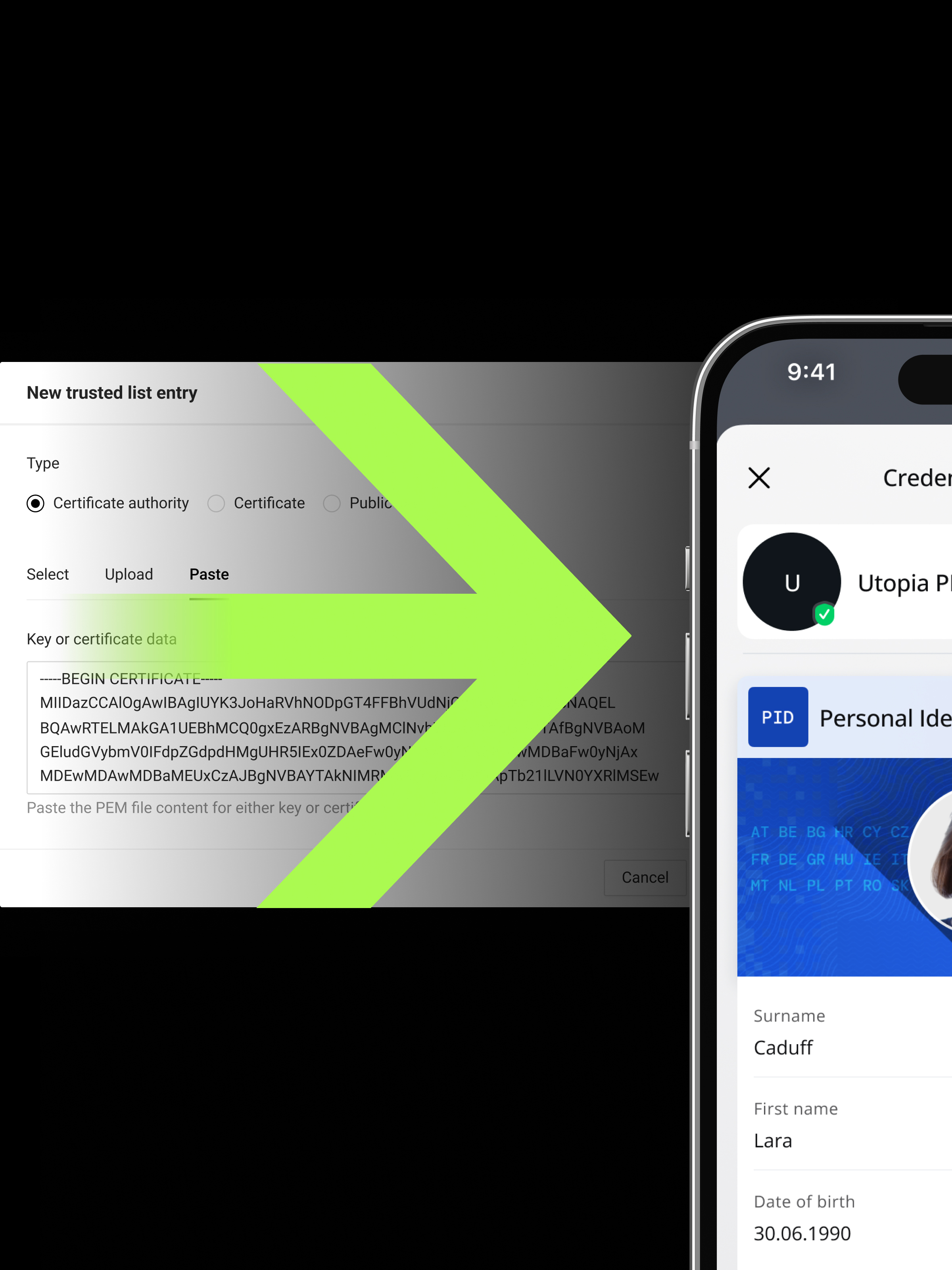
What should other countries do? Most nations cannot afford to hire over a hundred specialists or spend hundreds of millions on a single project. In recent years, vendors like Procivis worked hard on digital identity solutions. These serve as the essential building blocks for an eIDAS 2 implementation.
Is our technology (and other vendors’) off the shelf? No, of course not. Every country has different source systems and existing signature or government apps. A 100% off-the-shelf solution does not exist, but neither should a 100% DIY one. If you use Procivis One technology, you set your base within months or even weeks, rather than years. However, you must be careful if you choose available open-source solutions. Do your due diligence and ensure they are fit for purpose. We conducted an in-depth analysis of the EU reference implementation. We provided a solution to compensate for missing features, mainly in the backend.
A good example for a small country with a lean approach is Lithuania. Lithuania is using our stack to prepare for the production environment and test integration in their existing systems. More about it and how this could be a starting point for your country as well here.
Why this approach works
- Economics of scale: We don’t build for just one project. We build our software and support services to work across multiple national implementations
- Deep-rooted know-how: We have been focused exclusively on this challenge since 2019, building up specialized knowledge that is hard to replicate quickly
- Disciplined development: Since 2022, we have used a rigorous process. It involves a lot of 'boring' waterfall planning executed in two-week sprints to ensure we actually reach the finish line
- Zero political friction: We are one team with one clear goal. We don’t have the internal politics or shifting mandates that often stall government-led projects
- Immediate leverage: Procivis has already invested a double-digit million amount into this technology. You can benefit from that entire investment from day one
If you are responsible for an eIDAS 2.0 rollout, focus your DIY energy on what makes your country unique: your specific citizen services and your local user experience. Let us provide the secure, compliant, and production-ready foundation. It is the fastest way to get from a legal mandate to a live service.
Procivis One is ready today to help you meet the 2026 deadline without the hidden costs of building it alone.